 closed
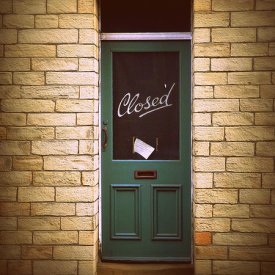

closed UK [kləʊzd] US [kloʊzd] adjective
NOT OPEN
1. <E > not open
• It might be less draughty if the door were closed.
Thesaurus+: ↑Open and closed
2. <E > not open for business
• All the shops were closed, so we couldn't buy any food.
Thesaurus+: ↑Open and closed
Common errors:
Warning: choose the correct adjective!
To talk about something not being distant in position or time, don't say 'closed', say close:
✗ Our house is very closed to the airport.
• Our house is very close to the airport.
To talk about people who know each other well and like each other a lot, don't say 'closed', say close:
✗ I am very closed to her although I don't see her often.
• I am very close to her although I don't see her often.
• The bank's closed now, but I can get some money out with my card.
• The restaurant is always closed on Wednesdays.
• The road was closed while the vehicles that had been involved in the accident were towed away.
• The hotel is closed during low season, i.e. from October to March.
• Is the kitchen door closed, so that the dog cannot get in?
• The road was closed all day by order of the police.
• Will patrons kindly note that this shop will be closed on 17th July.
ENDED
3. finished and therefore not able to be discussed further
• "The matter is closed," said the health minister.
Thesaurus+: ↑Finished and over
Common errors:
Warning: choose the correct adjective!
To talk about something not being distant in position or time, don't say 'closed', say close:
✗ Our house is very closed to the airport.
• Our house is very close to the airport.
To talk about people who know each other well and like each other a lot, don't say 'closed', say close:
✗ I am very closed to her although I don't see her often.
• I am very close to her although I don't see her often.
Idiom: behind closed doors
|
|
